And so, I like to begin every class with another reference to fire:
"Fired up? Ready to go!"
This is a phrase I like to ask students as they enter my class. It is a way of both checking in with students and reminding them that they are in my class and I want them to feel fired up about being in class.
But the phrase is also a fleeting reminder that we all have an influence on our world. Maybe that influence is just the room we are in, but that influence ripples out. So that phrase is a reminder to be sociologically mindful. It is a reminder that we are a participant in society. Society doesn't just happen to us; we are participants in the process. That awareness is what Michael Schwalbe talks about as "sociological mindfulness." It can change how we think and act and therefore how we influence the world. As President Obama once said,
"One voice can change a room.
And if it can change a room, it can change a city.
And if it can change a city it can change a state
And if it can change a state, it can change a nation
And if it can change a nation, it can change the world."
Regardless of your political affiliation, I think the sentiment here is true. You can change a room and that can change a much larger group. There's no telling where your influence stops. So, what do you want your voice to be? How do you want to impact the world? Think with sociological mindfulness about the impact you have on the world even if your influence may seem small.
The last reason why I like to use that phrase is because, as the video shows, even if you are not feeling fired up, after interacting with someone and saying that you are fired up, it just might get you fired up!
...just as St. Ignatius wanted everyone to be set afire with passion and zeal for the Kingdom of God, we continually exhort our faculty, students, and alumni to be agents for change in the world, men and women for others.
As Ignation Spirituality explains from Loyola Press, fire purifies. Biblical examples include burning up weeds, refining gold, and Jesus's followers being inspired and empowered with tongues of flame.
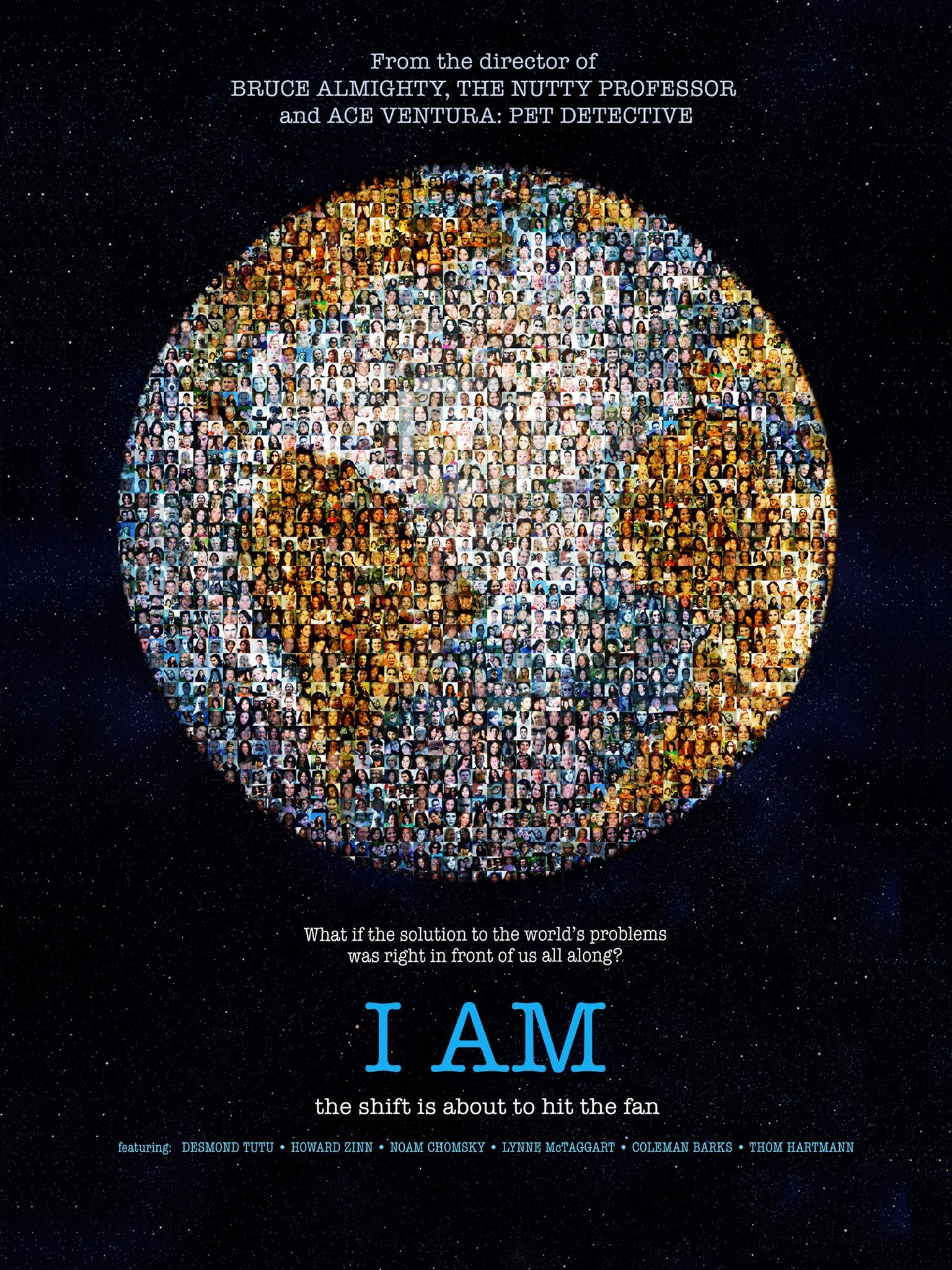
As a final conclusion to our class, I like to show the documentary I Am by Tom Shadyac. The movie resonates with me because it addresses many aspects that our class addresses and it presents a paradigm for thinking about how to move forward in the world using the lessons from our sociology class. And this is especially true if you felt like the inequalities that the class addressed make you pessimistic or are overwhelming.
Below are my movie notes about the most important parts of the movie and in parentheses are the parts of our class that relate to the movie. I think this movie is a great inspirational way to sum up our class and apply to your life. But, come back and revisit it, rewatch it and remind yourself of the lessons of our class. They will mean different things to you as you get older and more experienced. This is true for all of the lessons of our class, so I hope you will stay one of my students and one of my teachers. Peace and love to you,
This documentary was created by Tom Shadyac a writer/director of many Hollywood blockbuster films: Ace Ventura, Pet Detective, Liar Liar, The Nutty Professor, Bruce Almighty, Patch Adams, Accepted, and I Now Pronounce You Chuck and Larry. After a serious injury, Shadyac asks, “What’s wrong with the world? And what can we do about it?”
“Humanity is going to require a new way of thinking if it is to survive” – Albert Einstein
Science has recently begun to prove what ancient myth and religion have always espoused: There may be such a thing as a life force.
Lynne McTaggart, indefatigable investigative journalist, reveals a radical new biological paradigm -- that on our most fundamental level, the human mind and body are not distinct and separate from their environment but a packet of pulsating power constantly interacting with this vast energy sea.
The Field is a highly readable scientific detective story that offers a stunning picture of an interconnected universe and a new scientific theory that makes sense of supernatural phenomena.
What are the real needs that must be satisfied to live rich, fulfilling lives? This is the question David Suzuki explores in this wide-ranging study. Suzuki begins by presenting the concept of people as creatures of the Earth who depend on its gifts of air, water, soil, and sun energy. He shows how people are genetically programmed for the company of other species, and suffer enormously when we fail to live in harmony with them. And he analyzes those deep spiritual needs, rooted in nature, that are also a crucial component of a loving world. Drawing on his own experiences and those of others who have put their beliefs into action, The Sacred Balance is a powerful, passionate book with concrete suggestions for creating an ecologically sustainable, satisfying, and fair future by rediscovering and addressing humanity’s basic needs.
"The Last Hours of Ancient Sunlight" details in three parts the damage being done to our biosphere, the reasons why our culture would inevitably do such damage, and how we can fix the problem.
Elizabet Sahtouris, Evolutionary biologist, author of Gaia's Dance
Part 1: What's Wrong With our World? (Our socialization and the social construction of the world)
(The Social Construction of Science and Cultural Values)
Science is a story. It changes over time. Part of the story of science, since the Enlightenment, is that people are like machines; we are made from materials and we are mechanistic. We operate in the world under that assumption. We compartmentalize each other and our world this way.
(Culture and American Values)
This way of thinking creates a separateness a competitiveness and a materialism that pervade Western society, especially the United States.
“Be suspicious of what you want.” -Rumi
Native Americans noticed this way of thinking when Europeans first came to the Americas. They have a word called “wetico” which means a sort of cannibalism where one culture eats or destroys another culture’s way of life.
"One of the stories that we have been told is that we live in a reliable, well-behaved universe that operates predictably in actions independent of each other."
We tell ourselves a truth and a lie. The truth is that we need a small amount of physical things to make us happy: warmth, shelter, food, companionship. The lie is that if that much stuff makes you happy then twice as much will make you twice as happy and ten times will make you ten times happier and so on...
(Masculinity and Competition)
One myth that has been promoted that prevents us from realizing this interconnectedness is the belief that the essential nature of humans is to be competitive, instead of cooperative to dominate instead of subordinate, to seek kingdom over democracy. This is a myth promoted inaccurately by supporters of Darwin. Instead, the basis of nature is egalitarian, cooperative and democratic.
What we now know is that we are more than the sum of all of our parts and we are connected to much more than ourselves. Each individual is connected to all other humans, not just in the United States, but in the world. And each human in the world is connected to all living things. And all living things are connected to the non-living.
(Socialization and the Nature-Nurture Dynamic)
Desmond Tutu,
A solitary human is an impossibility. We came into being because a community of people came together. We depend utterly and completely on other human beings to be human. The truth is that we are because we belong.
Darwin mentioned, “survival of the fittest” twice and “love” 95 times. Humans evolved to cooperate. Sympathy is the strongest human instinct. We have mirror neurons that help us have sympathy. Our vagus nerve helps us to elevate us to compassion.
We are hard-wired for a compassionate response to the troubles of others. It's in our DNA. We are born to be egalitarian and democratic. We are born to respect each other, to be a community, to be our brother's keeper. We are hard-wired for a compassionate response to the trouble of others.
We function better in a state of love and compassion. Positive states are good for you; they literally renew your physiology. Anger makes us stupid. It inhibits our thinking. Our heart is our primary access point to our higher self.
Rumi
“What was said to the rose to make it open was said here to me in my chest.”
Sentience is a cause for rapture; just being here is a reason for celebration. Grief is also a form of celebration. The rose celebrates by falling to the ground and the clouds celebrate by weeping.
Francis of Assisi
It was easy to love God in all that was beautiful. The lessons of deeper knowledge though, instructed me to embrace God in all things.
I was with the Dalai Lama and I asked him what is the most important meditation we can do? He said, "Critical thinking followed by action." Understand the world and figure out how your talents can make the world a better place. Each of us must do something that makes our heart sing because no one will want to do it with us unless we are passionate and inspired.
Howard Zinn
Every word you utter to another human being has an effect, but you don't know it. Change comes about because of a million tiny acts....You can't be neutral on a moving train.
Desmond Tutu
“There is only one way of eating an elephant; a piece at a time. And so, you can’t do anything about global poverty, but we can do something about that guy over there.
Because you see, remember, The sea is really only drops of water that have come together...
God says, "You know what? I don't have anybody else except you."
As students join our class, please read this excerpt, Sociological Mindfulness, from sociologist Michael Schwalbe's book, The Sociologically Examined Life. Sociological Literacy: Sociological Mindfulness The third theory that helps us have a sociological perspective is from a recent sociologist, Michael Schwalbe who wrote the book The Sociologically Examined Life. In it, Schwalbe explains the concept of sociological mindfulness, in this excerpt.
After reading the excerpt, answer these: 1) What does Schwalbe mean by "sociological mindfulness?" 2) How is this different from sociological imagination? 3) Why does Schwalbe say we should bother with sociological mindfulness?
4)What are some ways that you might live your life differently or view aspects of your life differently if you live with sociological mindfulness?
Schwalbe's "sociological mindfulness" can be a difficult idea to grasp and Schwalbe admits that. Mindfulness is a concept that describes an awareness in the world at this moment here and now. It implies being tuned in to the present moment. Sociological mindfulness, therefore, is being tuned into both the way in which the present moment is influenced by society and also being tuned in to how we are a player in shaping the present moment. The simple way I look at sociological mindfulness is that it is the mirror image of sociological imagination. In other words, once we realize that people are influenced by their social setting, we can then realize that influence is happening right now and we are a part of it. Each of us is both influenced by other people and influencing other people.
So, I think there are 3 critical aspects to sociological mindfulness.
First, in being tuned in to a sociological awareness, we can see and appreciate how we are affected by when and where we live and all of the social experiences that entails. That is, we can think with a sociological imagination about ourselves.
Second, sociological mindfulness provides us with an awareness of how other people are shaped by society. And because we realize that others are impacted by these experiences we can appreciate each person's uniqueness. This makes us more understanding and ultimately more empathetic and forgiving of others.
The third part of sociological mindfulness is being tuned into the idea that not only is each of us being influenced by society, but also that each of us is a participant in society. We all affect the social world, even in little ways. Each little act we do matters and has an effect on other people. This aspect has a much longer explanation:
Sociological mindfulness is an awareness that we are being influenced by the world and so we can question that influence and hopefully guide it. And it is an awareness that we are influencing others and hopefully it makes us question that influence so we can have the impact that we want on our world. Sociological mindfulness is an awareness that society is dynamic and fluid and we are a part of that. In short, sociological mindfulness is the awareness that how we interact in the world matters!
Another way of thinking about sociological mindfulness is an exercise in Schwalbe's reading,
Think of the people you love and the kind of life you wish for them...I hope you will consider the possibility that mindfulness may be useful as a way to create better lives for more people.
What kind of life would you wish for those whom you love? How can you affect the world to be more like this way of life? Can you see how humans impact society? How can you make an impact that supports the world you want to live in? I think by answering these questions, students can begin to think with sociological mindfulness.
If you are still having a hard time grasping sociological mindfulness think about the past and all the ways individuals with sociological mindfulness have impacted our world: think about Rosa Parks, Gandhi, Elenore Roosevelt, Desmond Tutu, Caesar Chavez, Einstein, Mother Theresa, Rabbi Heschel, and think about the movements like the tearing down of the Berlin Wall, the women's rights movement, the civil rights movement, the elimination of polio etc... Here is a link to 9 people who changed the world. And here are 10 acts of courage that changed the world. All of these people and movements are a product of those who had sociological mindfulness. Think about Rosa Parks and realize that her actions changed the people on that bus and that changed the people of the city which changed our nation and that has influenced the world's view of human rights and the dignity of all human beings. Our actions in day to day life, like where we sit on the bus and how we treat others can make a difference. That awareness is sociological mindfulness. In my personal life, it might be my parents sending me to college even though they themselves never went there and they didn't have the money. My grandfather might have had sociological mindfulness when he came alone to America in 1916 at age 15. He wanted a better life for his future and his family's future. Both, my parents and my grandparents had an awareness that their choices mattered and that their choices affected the future. So they made the best decision they could for my future based on that awareness.
The Starfish Parable is another way to think about being sociologically mindful
One day, an old man was walking along a beach that was littered with thousands of starfish that had been washed ashore by the high tide. As he walked he came upon a young boy who was eagerly throwing the starfish back into the ocean, one by one. Puzzled, the man looked at the boy and asked what he was doing. Without looking up from his task, the boy simply replied, "I'm saving these starfish, Sir". The old man chuckled aloud, "Son, there are thousands of starfish and only one of you. What difference can you make?" The boy picked up a starfish, gently tossed it into the water and turning to the man, said, "It made a difference to that one!"
We cannot change the world, but by being aware of how our actions affect those around us, we can make a difference for those who we do come into contact with us.
This reminds me of chaos theory which is a modern theory of science and math that events sometimes seem random but really they are part of a complex system. Sometimes the butterfly effect is used an example - that the world is so connected and reliant on all processes that the wind from a butterfly flapping its wings in Mexico might contribute to a typhoon across the pacific in Japan. This thinking applied to society might be considered sociological mindfulness.
5. Jones's Touchscreen can be an example of sociological mindfulness - how?
If you realize that people are influenced by living in this age of technology that is sociological imagination. And if you question the influence of technology on you and make conscious choices about how to let it influence you, that is sociological mindfulness.
Here is a link to my post about all the research showing the effects of digital devices with special attention to an article from the Atlantic that highlights some of the consequences of the constant barrage of social media.
Applying Sociological Mindfulness to Teen-Parent conflicts 6. How would you apply sociological mindfulness to Coontz's article, Teen-Parent Conflicts?
Sociological mindfulness and the Iraq War: Ted Talk by Professor Sam Richards
Below is a Ted Talk by sociology professor Sam Richards that highlights sociological mindfulness from a "radical perspective". Richards talks about radical empathy but this another way of saying sociological mindfulness.
For a further understanding of this idea, you click on the link to "sociological mindfulness" and see some of my posts about it.
The Sociological Perspective: How do sociologists view the world?
As a review, I created this document, A Framework for the Sociological Perspective. The framework should help you conceptualize that while each of these paradigms and theories is unique, they are all related to the sociological perspective. Moving forward, it would be helpful to see the interconnection of each of these.
Three Paradigms
We learned about 3 paradigms that were all started by scholars who were examining the effects of the industrial revolution in Europe. These three paradigms were the beginnings of sociology and they are still influential in what sociologists study/focus on.
Be able to identify the bold aspects for each of the three paradigms.
How might each paradigm apply to the research from Stephanie Coontz about teen-parent conflicts?
How might each apply to names?
Three Theories
After sociology became an established discipline, three theories emerged as a way of better understanding how sociologists view the world.
Be able to identify each theory and how sociologists might view the world through that lens.
How might each theory apply to the research from Stephanie Coontz about teen-parent conflicts?
As students join our class, please read this excerpt, Sociological Mindfulness, from sociologist Michael Schwalbe's book, The Sociologically Examined Life. Sociological Literacy: Sociological Mindfulness
The third theory that helps us have a sociological perspective is from a recent sociologist, Michael Schwalbe who wrote the book The Sociologically Examined Life. In it, Schwalbe explains the concept of sociological mindfulness, in this excerpt.
After reading the excerpt, answer these: 1) What does Schwalbe mean by "sociological mindfulness?" 2) How is this different from sociological imagination? 3) Why does Schwalbe say we should bother with sociological mindfulness?
4)What are some ways that you might live your life differently or view aspects of your life differently if you live with sociological mindfulness?
Schwalbe's "sociological mindfulness" can be a difficult idea to grasp and Schwalbe admits that. Mindfulness is a concept that describes an awareness in the world at this moment here and now. It implies being tuned in to the present moment. Sociological mindfulness, therefore, is being tuned into both the way in which the present moment is influenced by society and also being tuned in to how we are a player in shaping the present moment. The simple way I look at sociological mindfulness is that it is the mirror image of sociological imagination. In other words, once we realize that people are influenced by their social setting, we can then realize that influence is happening right now and we are a part of it. Each of us is both influenced by other people and influencing other people.
So, I think there are 3 critical aspects to sociological mindfulness.
First, in being tuned in to a sociological awareness, we can see and appreciate how we are affected by when and where we live and all of the social experiences that entails. That is, we can think with a sociological imagination about ourselves.
Second, sociological mindfulness provides us with an awareness of how other people are shaped by society. And because we realize that others are impacted by these experiences we can appreciate each person's uniqueness. This makes us more understanding and ultimately more empathetic and forgiving of others.
The third part of sociological mindfulness is being tuned into the idea that not only is each of us being influenced by society, but also that each of us is a participant in society. We all affect the social world, even in little ways. Each little act we do matters and has an effect on other people. This aspect has a much longer explanation:
Sociological mindfulness is an awareness that we are being influenced by the world and so we can question that influence and hopefully guide it. And it is an awareness that we are influencing others and hopefully it makes us question that influence so we can have the impact that we want on our world. Sociological mindfulness is an awareness that society is dynamic and fluid and we are a part of that. In short, sociological mindfulness is the awareness that how we interact in the world matters!
Another way of thinking about sociological mindfulness is an exercise in Schwalbe's reading,
Think of the people you love and the kind of life you wish for them...I hope you will consider the possibility that mindfulness may be useful as a way to create better lives for more people.
What kind of life would you wish for those whom you love? How can you affect the world to be more like this way of life? Can you see how humans impact society? How can you make an impact that supports the world you want to live in? I think by answering these questions, students can begin to think with sociological mindfulness.
If you are still having a hard time grasping sociological mindfulness think about the past and all the ways individuals with sociological mindfulness have impacted our world: think about Rosa Parks, Gandhi, Elenore Roosevelt, Desmond Tutu, Caesar Chavez, Einstein, Mother Theresa, Rabbi Heschel, and think about the movements like the tearing down of the Berlin Wall, the women's rights movement, the civil rights movement, the elimination of polio etc... Here is a link to 9 people who changed the world. And here are 10 acts of courage that changed the world. All of these people and movements are a product of those who had sociological mindfulness. Think about Rosa Parks and realize that her actions changed the people on that bus and that changed the people of the city which changed our nation and that has influenced the world's view of human rights and the dignity of all human beings. Our actions in day to day life, like where we sit on the bus and how we treat others can make a difference. That awareness is sociological mindfulness. In my personal life, it might be my parents sending me to college even though they themselves never went there and they didn't have the money. My grandfather might have had sociological mindfulness when he came alone to America in 1916 at age 15. He wanted a better life for his future and his family's future. Both, my parents and my grandparents had an awareness that their choices mattered and that their choices affected the future. So they made the best decision they could for my future based on that awareness.
The Starfish Parable is another way to think about being sociologically mindful
One day, an old man was walking along a beach that was littered with thousands of starfish that had been washed ashore by the high tide. As he walked he came upon a young boy who was eagerly throwing the starfish back into the ocean, one by one.
Puzzled, the man looked at the boy and asked what he was doing. Without looking up from his task, the boy simply replied, "I'm saving these starfish, Sir".
The old man chuckled aloud, "Son, there are thousands of starfish and only one of you. What difference can you make?"
The boy picked up a starfish, gently tossed it into the water and turning to the man, said, "It made a difference to that one!"
We cannot change the world, but by being aware of how our actions affect those around us, we can make a difference for those who we do come into contact with us.
This reminds me of chaos theory which is a modern theory of science and math that events sometimes seem random but really they are part of a complex system. Sometimes the butterfly effect is used an example - that the world is so connected and reliant on all processes that the wind from a butterfly flapping its wings in Mexico might contribute to a typhoon across the pacific in Japan. This thinking applied to society might be considered sociological mindfulness.
5. Jones's Touchscreen can be an example of sociological mindfulness - how?
If you realize that people are influenced by living in this age of technology that is sociological imagination. And if you question the influence of technology on you and make conscious choices about how to let it influence you, that is sociological mindfulness.
Here is a link to my post about all the research showing the effects of digital devices with special attention to an article from the Atlantic that highlights some of the consequences of the constant barrage of social media.
Applying Sociological Mindfulness to Teen-Parent conflicts 6. How would you apply sociological mindfulness to Coontz's article, Teen-Parent Conflicts?
Sociological mindfulness and the Iraq War: Ted Talk by Professor Sam Richards
Below is a Ted Talk by sociology professor Sam Richards that highlights sociological mindfulness from a "radical perspective". Richards talks about radical empathy but this another way of saying sociological mindfulness.
For a further understanding of this idea, you click on the link to "sociological mindfulness" and see some of my posts about it.
We were so fortunate to have a panel of our own students talking about "race." The students had many insights. One was that those who have to navigate different racial worlds never feel quite right anywhere. For example, some students emigrated from another country like Mexico. So, in the US they are considered Hispanic and they do not feel that they fit in, but in Mexico they are considered white and they do not feel that they fit in there.
Along these lines, students spoke about how their master status often becomes their minority status. That is, other people (usually those from the majority) only see them as black or Asian or whatever their minority status is. This takes away the student's individuality. Sometimes this results in the student being forced to speak for their whole minority group. It also results in many of the students feeling pressure to represent their minority group or live up to an ideal that is more pressure than those in the majority have to experience.
Also students talked about the racial prejudice that lies just below the surface; sometimes it comes out from another student in a class of their, or their own parents or school teachers and administrators. A third conclusion that I drew from the panel was the diversity within different groups. Many people assume that all blacks are the same or all Hispanics are the same, but really there is a great deal of diversity within each group and this is another reason that stereotypes are ignorant and don't hold up.
Racially profiled on a flight.Mom said that we will be treated differently,
but have to react differently.Profiled
as terrorist, but also stereotyped that good at math, bad at sports.Mom said we might be treated differently but
what matters is how we treat others.
Recalls a time teased by a kid in 6th grade.Called Osama Bin Laden by a boy who didn’t
even know me. Asked if he dislikes Jewish
people even though most friends are Jewish. Asked if I know how build bombs.
I grew more aware of cliques and how race shapes social
groups.But I didn’t feel that I fit
into one group, but was still bullied for being not white.Asked where are you from?Where are you really from?Parents encouraged me to blend in and not
identify, but wanted to embrace being brown, Pakistani Muslim.
Alerted at the rise of white supremacy and trump, I wanted
to be involved.
I know I am blessed and cursed to live in a bubble.
My bubble burst a few weeks ago. I was volunteering at a hospital, a white
woman walked past without a pass.When I
stopped her, she asked my name and told me that I have no business in this
country as a brown boy.She talked about
how I don’t belong here.You’re people
ruined this country and destroy buildings.
She shouted cussed me out and called me “sand nigger”.I got a hold of myself and remembered my moms
advice.I gave her a pass and wished her
well and asked her to have a nice day.
Reya
Identify as Biracial and live in a multiracial family.Father is white german/Swedish.Mom is Indian and Pakistani but switched
between both.I also have two black
uncles and black cousins.
Adopted my sister who was black, then had me.
I knew we weren’t conventional.
Always normal to have different races in my family.
3rd and 4th grade is when I realized
it was different and I became more aware.
I was always more pale than my mom.
People used to think my mom was my nanny.One friend told me that my mom couldn’t be my
mom.People said that my sister couldn’t
be my sister just because of our looks.People think how someone looks defines their experiences and their
relationships.I was visiting an aunt in
the hospital and followed back to the room because the nurse didn’t believe that
we were sisters and only family were allowed.People were more inclined to think that my adopted sister and my mom
were blood related because they are both minorities but not me and my mom even
though shes my biological mom.
Didn’t connect to my mom’s side of the family because they
didn’t accept that we were a mixed family. My own grandma said that I have
“devil’s blood” in me because of my Indian and white.Crazy because your grandma is supposed to
love you no matter what, but because of race, they have these viewpoints.Now I am more proud
Dwisha
Used to be troublesome.
Typical Indian family.
I was different, I took interest in other cultures.My family never understood this.When I played with cousins, I always felt
left out.There were groups – older
cousins and younger cousins and then I was stuck in the middle.I used to be the goody two shoes in middle
school.In high school I rebelled –
didn’t want to do chores or get good grades.My dad is a pediatrician in India and he owns a hospital.I grew up feeling that I was not Indian.In high school I didn’t feel like myself, my
family didn’t accept
Kat
Born in Chicago.Raised in Jalisco, Mexico.
Growing up in Mexico was nice.Played with everyone esp on fri sat.Went to religious catholic school . Less
rules in Mex.I miss it.Still feels like my home.
Moved back in 6th grade.Knew very little English.I couldn’t make friends because of the
language and people didn’t want to talk to me.Eventually, I talked and became friends with the few other
minorities.I don’t fit into the same
experiences with my parents.I
I started to be rebellious and self harm.But parents don’t accept mental illness as a
real medical problem.I was bullied and
stereotyped.We came to high school but
thought we were going to Mundelein but ended up at SHS.Felt like I was being stereotyped that I
wasa minority who was up to no good.
Microaggressions – day after election.“Trump won, why are you still here?”
Jenny
Born in Seoul South Korea.I have memories of Korea.I am
part of 1.5 generation.I migrated with
parents so mot exactly the first one here.Father will move to states for better econ opportunity, but family will
stay or vice versa.Wild Goose father. Moved
to California first.Actually very
excited.
Moving here, realized people thought they knew me better
than I know myself.Got to choose my own English name –
Jenny.Chose Jenny because I thought it
was sexy JAt first got in trouble because of language
barrier.Despite speaking eng fully by 3rd
grade still getting bullied.I moved to
Buffalo Grove at age 9.
Remember my first night at orientation they spoke to me
slowly assuming I could speak slowly.They put me in ESL without evaluating me.
Race became master status – everything related back to my
race.Chiky eyes, youre pretty for an
Asian, youre smart because youre Asian,
Mom packed traditional Korean food, but I tried to speak
English on the phone.
I tried to Americanize myself as much as I could. I wished
that I was white.After middle school I
was at all time low.At SHS I felt
better, but still tried hard to prove stereotypes wrong by rebelling and not
getting good grades.Didn’t want to be
just another cookie cutter Asian.
Mom put me into traditional Korean drumming and I was
thrilled to get praise from the Korean community.It’s the most joy and pride I have felt in my
own culture.I never viewed the world by
races, but …
My said that she was told America is a melting pot but
recently Race is more of a salad bowl
People try to pick out ingredients and make fun of them or
take them out of the salad bowl.
I think we should embrace our backgrounds and our history
but not judge others based on their race.
Emily
Asian (Thai and Laotian) and identify as Caucasian?
My identity and race problem is never really placed quite
right.
I remember watching Tarzan and realizing that I didn’t look
like my family like Tarzan and his tribe of apes.My mom told me that she loved me no mater
what. However in middle school I had more trouble because there were other
Asians who I didn’t relate to even though I wanted to identify with them.I felt a little left out. I started
identifying as white.I couldn’t put
that hyphen next to my nationality.Race
was always at the forefront of my life.I have learned some
-->
Everyone’s situation is different.Listen with an open mind.
There's a few ways that I like to think about the movie. One is the theme of love throughout the movie. I think the movie is really about love, especially the love of a father for his son. But it is also about love versus fear/violence. Sonny told C that "Fear lasts longer than love," but at the end of the movie, no one fears Sonny any more, but his C still loves him and still feels loved by him. Also, Carmine stops by and so does C's dad both to show that they care about Sonny and they still love him. Love transcends death, but fear does not. Fear on the other hand, leads to violence and violence begets more violence. We see this throughout the movie as violence starts small (throwing a stick at the bus) but then it grows and gets out of control (firebombing at the end, and even Sonny's fate). I also think the idea of art imitates life imitates art imitates life... is interesting. This movie was based on real life events of Chazz Palimentieri and then the movie influences real life when it thrusts Lillo Brancato into stardom and seals his fate.
Sometimes they say "art imitates life imitates art..." Here is a link to a 20/20 interview about how Lillo Brancato became the wasted talent that his friends were in the movie.
Micro-Macro Dynamics
The racism throughout the film is obvious. What is often taken for granted is where the racism comes from. What are the micro and macro sociological forces that create this racism? Think in terms of the Abandon Ship exercise. How did micro and macro forces come together to influence who was saved and who was tossed? Apply this to the racism in the movie. Can you see any micro or macro sociological forces in your own life?
Groups
What are all the groups that Calogero belongs to? (Think in terms of the circles exercise we did in class.) Would you put him in Sonny’s crew, or would you put him and Sonny in their own group? What is Calogero’s Master Status? Why do you think so? Do you think his master status changes throughout the movie? What is your own master status? Has it changed throughout your life like it has for Calogero? You might even discuss the characters in terms of their ingroups/outgroups.
Social Construction of Reality
How is their reality in the neighborhood socially constructed? What are the unwritten rules that govern how you can or can’t act? How do you think this construction came about? Can you see their racist attitudes as a social construction? What are some socially constructed ideas that you believe?
Sociological Imagination
Use your imagination to think about the dynamics and social forces that created Calogero’s “world”. How did the neighborhood come to exist? How did the different groups within the neighborhood come together there? Clue: the movie doesn’t show this, you have to think about what the movie doesn’t show. Another way to put it is how are Calogero’s personal troubles (his biography) part of the bigger picture (his history and society)? How is this similar or different than the groups that have shaped your life?
Sociological Mindfulness
Who is sociologically mindful in the movie? How is this character sociologically mindful and how does this sociological mindfulness affect him? Do you think it makes a difference in his life? How might sociological mindfulness make a difference in your own life?
Key Takeaway #1 Students sit all day, and sitting is exhausting.
If I could go back and change my classes now, I would immediately change the following three things:
mandatory stretch halfway through the class
put a Nerf basketball hoop on the back of my door and encourage kids to play in the first and final minutes of class
build
in a hands-on, move-around activity into every single class day. Yes,
we would sacrifice some content to do this – that’s fine. I was so tired
by the end of the day, I wasn’t absorbing most of the content, so I am
not sure my previous method of making kids sit through hour-long,
sit-down discussions of the texts was all that effective.
Key Takeaway #2 High school students are sitting passively and listening during approximately 90 percent of their classes.
If I could go back and change my classes now, I would immediately:
Offer
brief, blitzkrieg-like mini-lessons with engaging,
assessment-for-learning-type activities following directly on their
heels (e.g. a ten-minute lecture on Whitman’s life and poetry, followed
by small-group work in which teams scour new poems of his for the very
themes and notions expressed in the lecture, and then share out or
perform some of them to the whole group while everyone takes notes on
the findings.)
set an egg timer every time I get up to talk and
all eyes are on me. When the timer goes off, I am done. End of story. I
can go on and on. I love to hear myself talk. I often cannot shut up.
This is not really conducive to my students’ learning, however much I
might enjoy it.
Ask every class to start with students’
Essential Questions or just general questions born of confusion from the
previous night’s reading or the previous class’s discussion. I would
ask them to come in to class and write them all on the board, and then,
as a group, ask them to choose which one we start with and which ones
need to be addressed. This is my biggest regret right now – not starting
every class this way. I am imagining all the misunderstandings, the
engagement, the enthusiasm, the collaborative skills, and the autonomy
we missed out on because I didn’t begin every class with fifteen or
twenty minutes of this.
Key takeaway #3 You feel a little bit like a nuisance all day long.
If I could go back and change my classes now, I would immediately:
Dig
deep into my personal experience as a parent where I found wells of
patience and love I never knew I have, and call upon them more often
when dealing with students who have questions. Questions are an
invitation to know a student better and create a bond with that student.
We can open the door wider or shut if forever, and we may not even
realize we have shut it.
I would make my personal goal of “no
sarcasm” public and ask the students to hold me accountable for it. I
could drop money into a jar for each slip and use it to treat the kids
to pizza at the end of the year. In this way, I have both helped create a
closer bond with them and shared a very real and personal example of
goal-setting for them to use a model in their own thinking about goals.
I
would structure every test or formal activity like the IB exams do – a
five-minute reading period in which students can ask all their questions
but no one can write until the reading period is finished. This is a
simple solution I probably should have tried years ago that would head
off a lot (thought, admittedly, not all) of the frustration I felt with
constant, repetitive questions.
A few clarifying comments are in order, based on the half million reads and many comments and tweets:
I was thus not the author of the piece; there was no attempt on my
part to hide behind a mythical person, though many thousands attributed
the piece to me (even though my introduction to the post said that I was
not the author).
There were hundreds of comments about the cause of this HS drudgery
being due to NCLB, Common Core, teacher accountability, and standardized
tests. OOPS – as I noted early in one of my few replies to comments,
Alexis teaches in a private school. Indeed, she teaches overseas in an
American International School. So those many reader comments were a bit
of projection – which, itself, is perhaps worthy of another post. The
fact that such passive learning exists in good private schools (and
colleges) only makes the matters raised in her post MORE important: why
do we continue to make even elite education so passive when we don’t
have to?
The overwhelming response to the post was positive. Only a tiny
handful of readers trashed the post, the author, me, and/or other
commenters who were positive. They felt attacked as educators (though I
really believe a fair reading of the piece shows that it was not an
attack on teachers but schooling as we have all experienced it).
The most poignant comments had to do with Alexis’ observation that
the teachers she observed – as well as herself and me on video – are
unwittingly more sarcastic than we imagine ourselves to be. Numerous
parents picked up on this truth, too. Only 2 commenters tried to defend
sarcasm in teachers.
Alexis teaches in a school that has a block schedule, as was noted
by the post. That made the passivity longer and more tiring – but it
also meant that Alexis did not get to visit all the students’ classes
(which included art and other more active classes). The good news:
Alexis shadowed students in the other block and will report her findings
later this week.